Culture
22 December 2023
The Tragedy of Mustafa al-Hallaj
Faris Shomali
Share
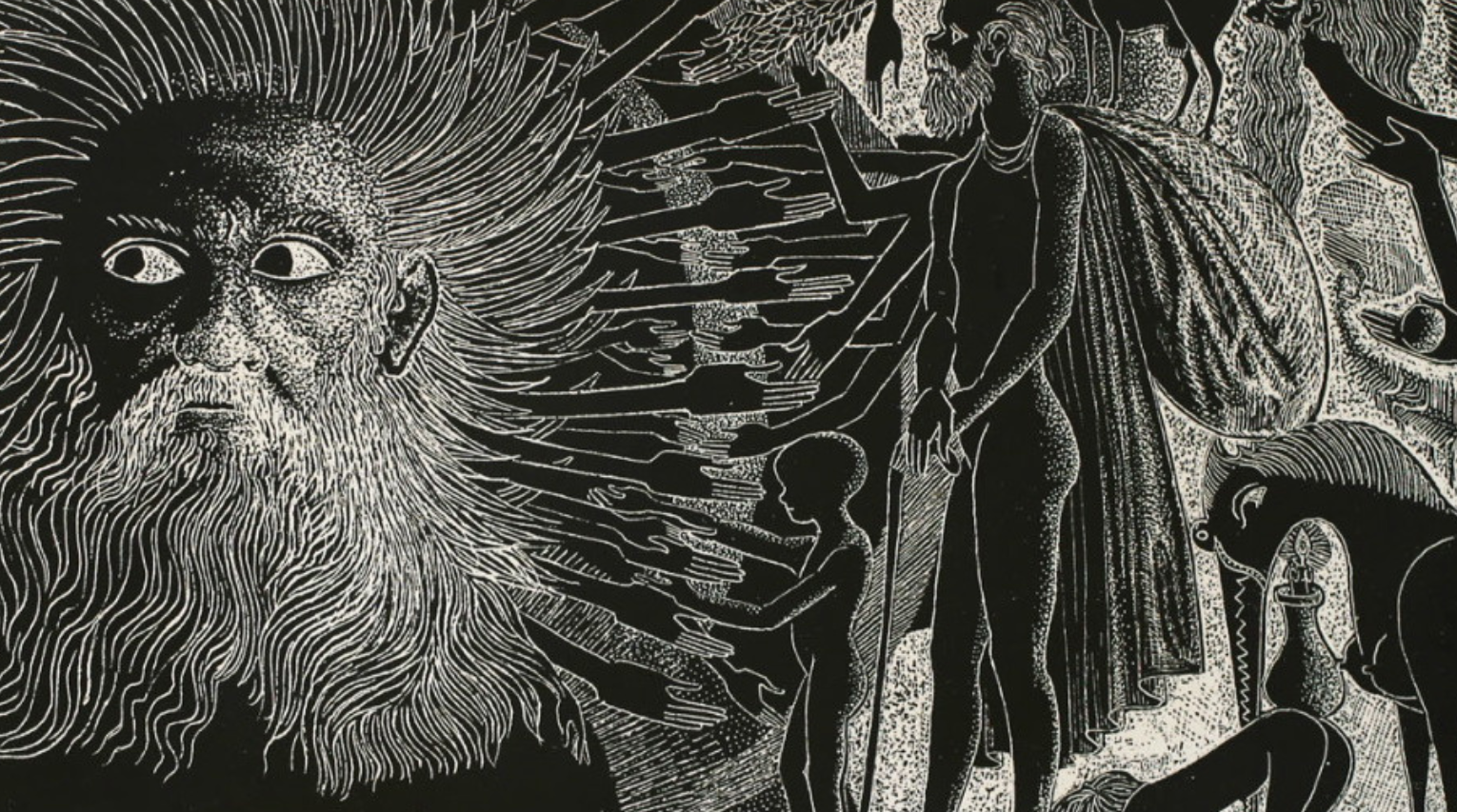
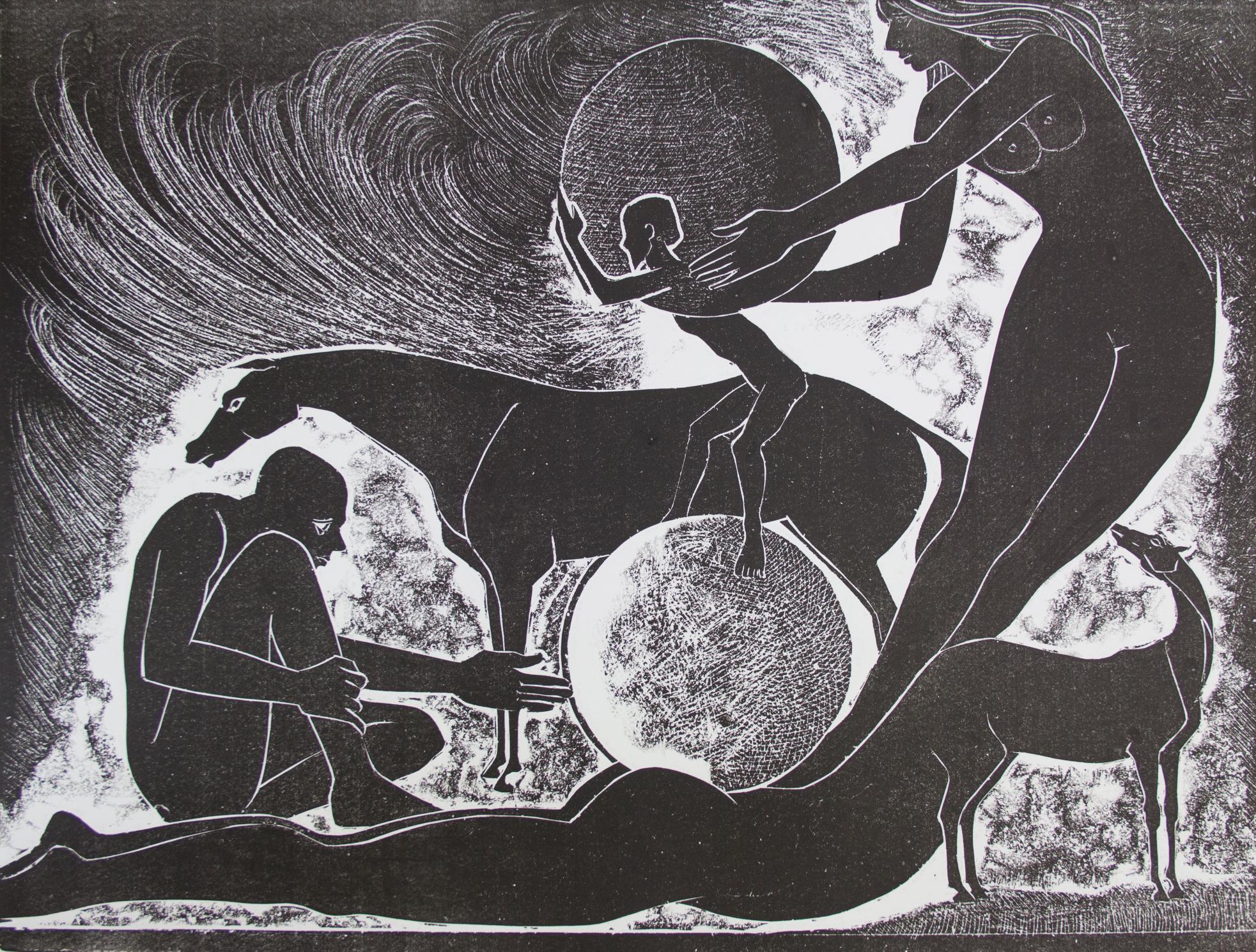
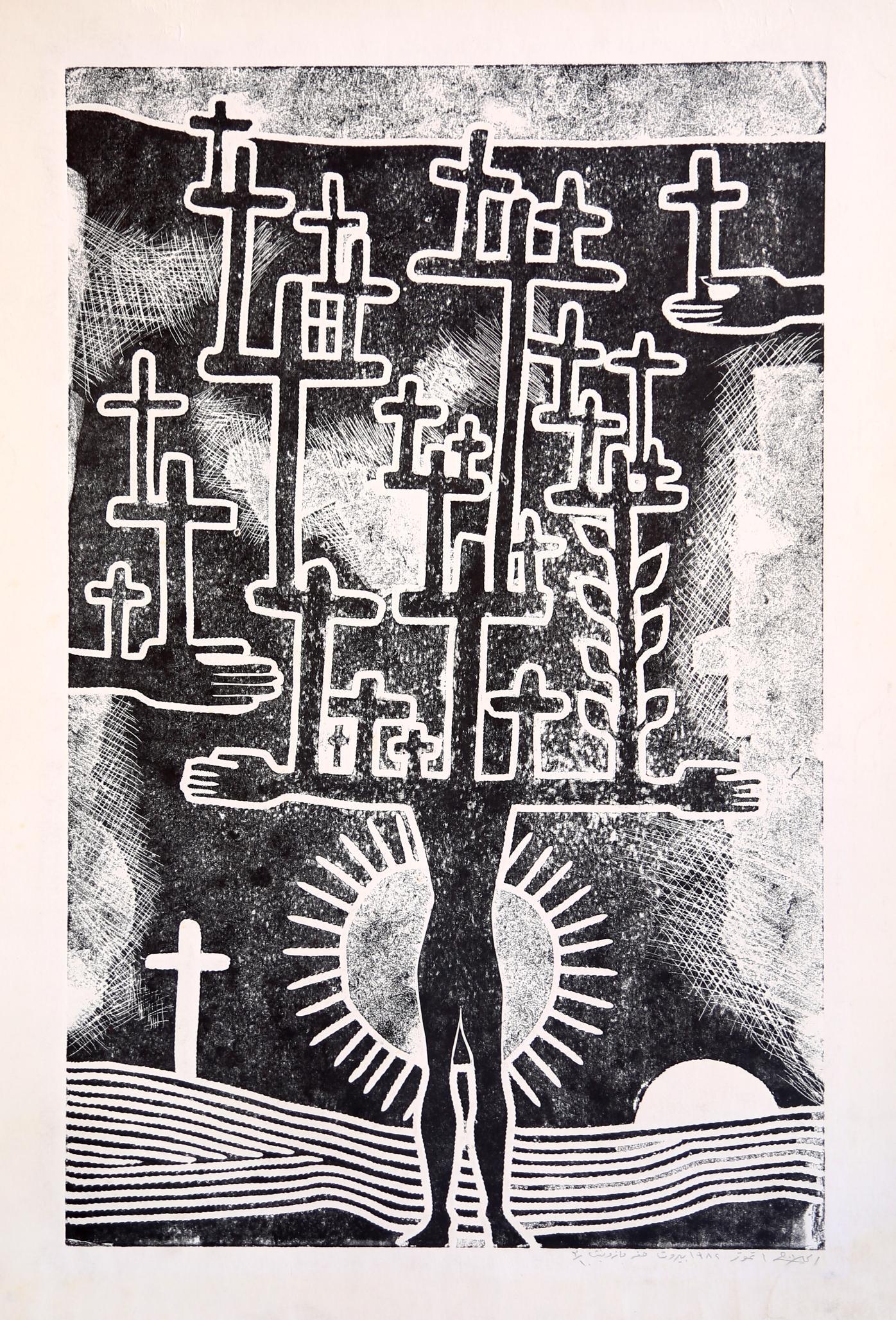
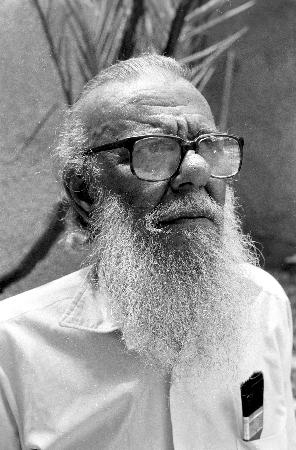
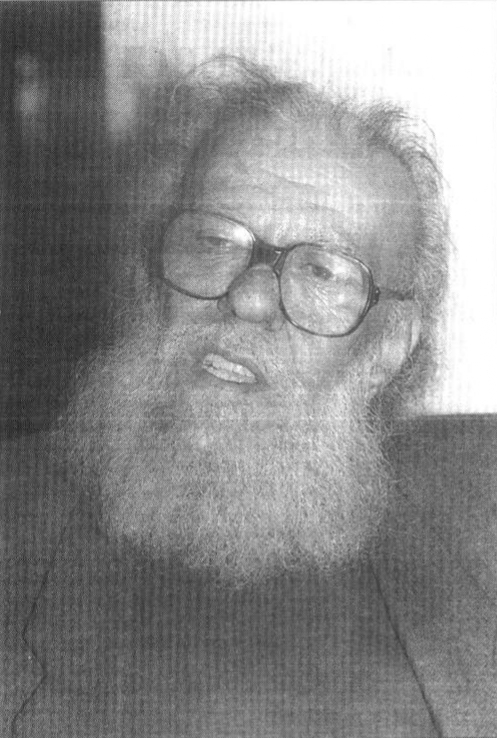
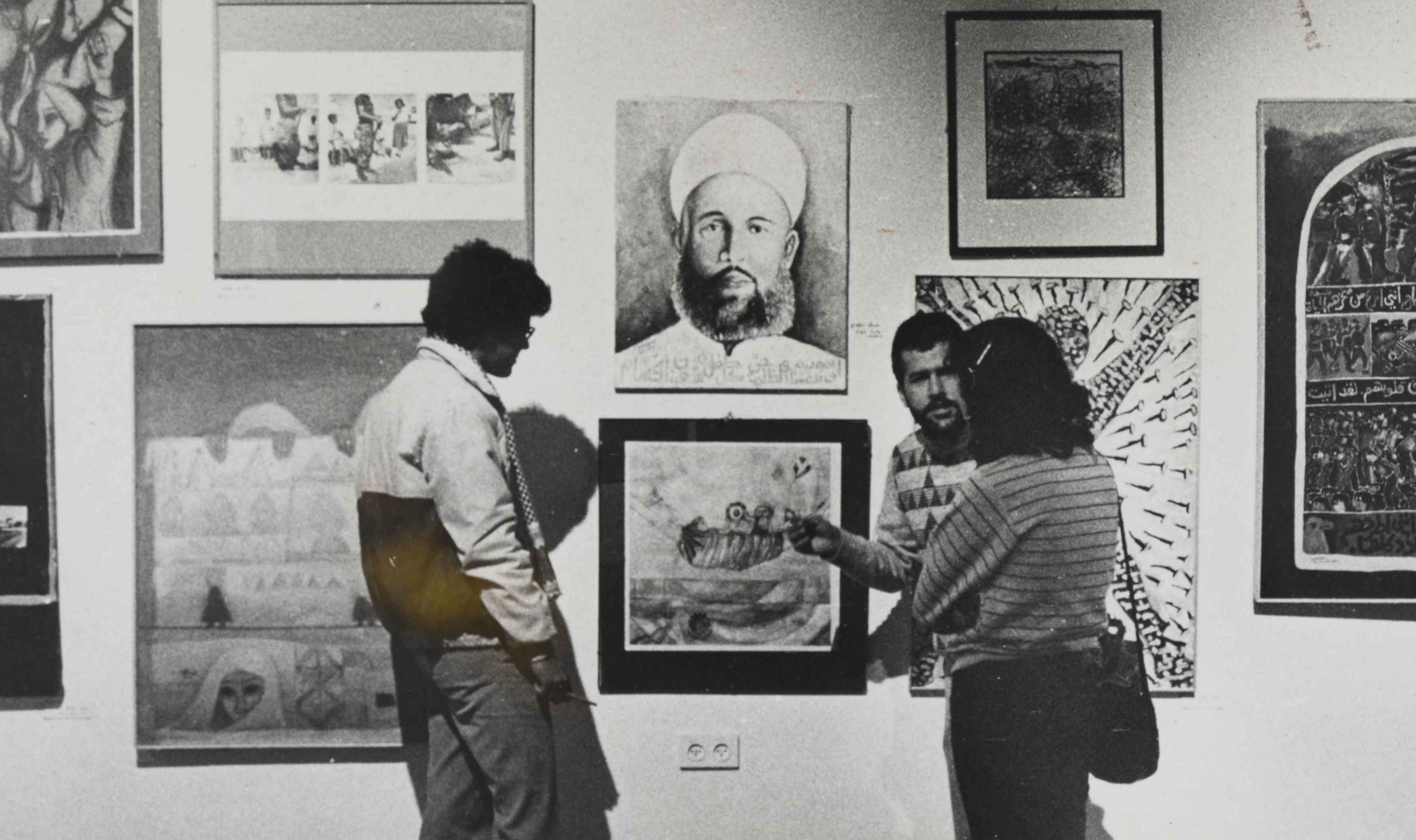
Mustafa al-Hallaj is not an artist—a tragedy, he is. His prints were stages for his carefully carved black-and-white mythologies to unfold. To al-Hallaj, mythology was neither a mere subject nor a sheer influence; they were lived, embodied experiences. His life was a tragedy, and he understood it as such.
At ten, al-Hallaj was sentenced to nomadism as his village, Salama, near Jaffa, was razed to the ground in 1948. With his family, he began a year-long trek for refuge, threading their way through the streets and quarters of al-Lydd, Ramallah, Damascus, and Beirut before pitching their tent in one of Cairo’s poor neighborhoods.
With its artifacts, sculptures, and monuments, Cairo overwhelmed the young refugee. This impact led him, years later, to enroll in the Cairo Academy of Fine Arts to study sculpture. In 1968, al-Hallaj joined Luxor Atelier and earned his master’s degree. While in Luxor, he made a life-changing decision, later reflected upon in an interview with artist and art historian Samia Halaby: “I was in Luxor thinking—sitting, in fact, in the lap of Amenhotep III—when I heard the song of the West Bank on radio, and I felt suddenly that my umbilical was tied to the Sidr tree in Salam[a].”[1]
At this point, al-Hallaj decided to leave Egypt and Join the Palestinian art movement under the aegis of the Palestine Liberation Organization. Moving to Damascus and then Beirut, he embraced his nomadism in hopes of returning to the homeland he was coerced to leave in 1948. Conscious of his inability as a wanderer to tend to his sculptures, al-Hallaj walked in the footsteps of Jochebed, Moses’s mother, and entrusted the Nile with his sculptures. “It was my wanderings that led me to [woodblock] carving. Sculpture requires institutions, stability, and land, and I have none… Sculpture is not suitable for the displaced artist, I think.”[2]
In the 1982 Lebanon War, under heavy bombing, al-Hallaj had to flee again to Damascus, leaving Beirut and his studio behind. During the war, al-Hallaj fought a lost battle for his own works—an oeuvre of some twenty-five thousand prints. While he succeeded in saving some woodblocks, this awe of loss drove him into harboring grief—A decade of melancholy and artistic silence.
When al-Hallaj rekindled his creative flame, he set out on an extremely ambitious work—a horizontal piece stretching over 100 meters in width and barely 30 centimeters in height. In 2002, while hard at work on his masterpiece, an accidental fire swept through his studio. Al-Hallaj could have escaped but chose not to. He walked into the flames to save his masterwork. The poet of black and white and the patriarch of Palestinian artists, as he is often referred to, could not take another loss. As a tragic protagonist, he understood his life for what it was—a tragedy—perishing in a final struggle against loss.
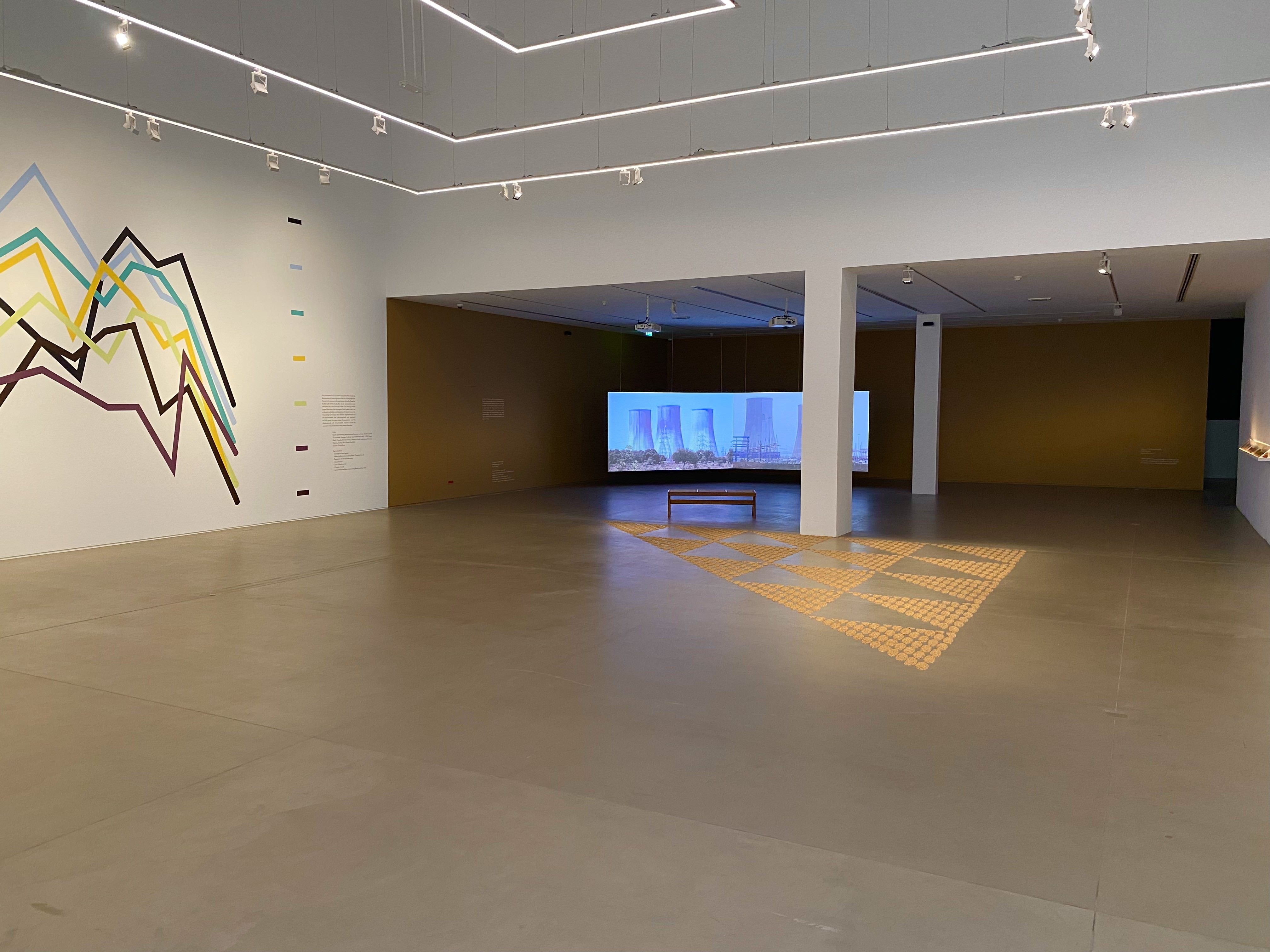
Discover more as part of On This Land : On This Land opened on November 19th, 2023 at Alserkal Avenue’s Concrete. Born as a triangulated response, the exhibition was spirited to life in just 3 weeks, building on years of research and informed dialogue on Palestinian art and culture by The Palestinian Museum and the Barjeel Art Foundation, with the curatorial support of Alserkal Arts Foundation.
[1] Samia Halaby, Liberation Art of Palestine: Palestinian Painting and Sculpture in the Second Half of the 20th Century (Ramallah and New York: H.T.T.B. Publications, 2001), 22.
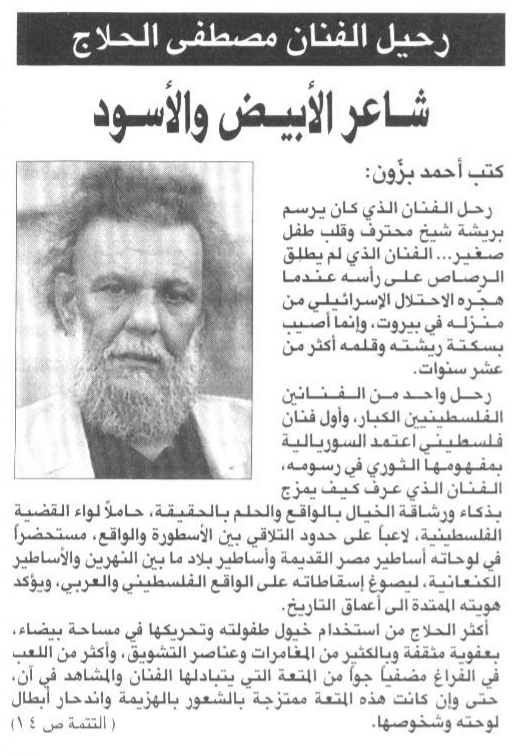
[2] Ahmad Bazoun, “Al-Fannān at-Tashkīly al-Filasṭīny Muṣṭafā al-Ḥallāj: Arṣum Bi-Rūḥ at-Ṭifl Wa-Alʿab Fī Farāgh al-Lawḥah Ḥattā al-Mutʿah [Palestinian Plastic Artist Mustafa Al-Hallaj: I Draw with the Spirit of a Child and Play in the Woodblock’s Void until Ecstasy],” Assafir, March 5, 1994, sec. Culture, 14.
expression
Enjoy Your Freedom Outside
culture
From Peace to Protest
culture
Homecoming | A Space For You
culture
In Her Country
culture
Spoons Out of Water
expression
Precarious Existence
culture
Roaming
expression
Abandoned: When a Crisis Allows Nature Back In
culture
An Outlook on Change
culture
Hybrid senses - Slow Art Tour
opinion
Humanising Cities
opinion
What is the role of the artist in society?
culture
Hassan Hajjaj: Carte Blanche
culture
Soothing the Soothsayers
culture
Humanity as Refuge I
culture
Humanity as Refuge II
culture
A Force To Reckon With: Manal Aldowayan
culture
Alserkal Avenue | The First Decade (Part 2)
culture
Alserkal Avenue | The First Decade (Part 1)
culture
Turning The Spotlight On UAE-Based Emerging Artists
culture
Architecture Meets Nature: While We Wait
culture
Burning Issues
expression
When Solidarity Is Not a Metaphor
expression
A closer look with Azza Al Qubaisi
expression
A closer look with Nathaniel Rackowe
expression
A closer look with Kais Salman
expression
A closer look with Sarah Almehairi
culture
Imploded, burned, turned to ash
culture
Sneak peak of An Outlook on Change
culture
Concrete Closed Sessions | Nujoom Alghanem
culture
JAFR. The Alchemy of Signs by Nja Mahdaoui | Elmarsa Gallery
culture
Sneak peak of Burning Issues
culture
Vikram Divecha's "El dorado"
culture
Cultures in Conversation | Openness and the Path to Prosperity
expression
The Alphabetics of the Barista Part II
expression
A Poem, A Garden
opinion
Sneak peak of Humanising Cities
culture
Cultures in Conversation | What Makes a City: Dimensions of Culture and Possibility of Community
expression
Alserkal Insider | Nightjar Coffee Roasters with Leon Surynt
culture
Cultures in Conversation | Never Be Lost: Learn to Read the Stars
culture
Cultures in Conversation | Climate change in the classroom, living room, street and beyond
expression
Concrete Closed Sessions: Danabelle Gutierrez and Charlie119
culture
Echo Holdings x Synthanatos
culture
Dayanita Singh in Conversation
culture
Noria: Circulation Of People In Systems
culture
When the Band Comes Marching In
culture
Adapt to Survive: Notes from the Future
culture
"Under": A Video Documentation
culture
While We Wait
culture
Safina Radio Project: Venice
culture
Super Fence
culture
Cultural Consulting
culture
Resonance / رنين الرِّياح
culture
On Translucency
culture
Deliberate Pauses / وقفات متروية
culture
Research Rooms
culture
Nepal Picture Library
culture
Zora Snake
culture
Dima Srouji and Jasbir Puar
expression
The Greening Story
culture
Nahil Bishara’s Jerusalem
culture
Abu Fadi
culture
Fathi Ghabin: A Self-Portrait of the Working-Class
culture
On This Land
culture
The Age of Multi-Crises
expression
Quoz Arts Fest
expression
Drawing a Shifting Landscape
culture
Rewilding the Kitchen
expression
Radical Podcast x Alserkal Avenue Mini Series
expression
Alserkal Spotlight: Radical Contemporary Podcast
Haroon Mirza: Deciphering Nuance
expression
From the Archive | Spring 2023 Residency
A Feral Commons
The Global Co-Commission

opinion
What We're Listening To
Global Co-commission: 2022 - 2024
culture
Indie Publishers III Women Powered Platforms
expression
Making History: A Study of Archives
expression
Adverse Poetries
culture
Letter from Hollywood: How RRR Redefined Global Pop
expression
An Orchestration of Magic
Beyond the Measure of Time
expression
The Tree School Chronicles
expression
The Street Came First
culture
The Myth about Maths
culture
Ink, Paper, Alchemy II
opinion
Turn On, Tune In
expression
Saint Levant: Home-maker
culture
What did we gain at COP27?
expression
Fahd Burki and Ala Ebtekar Take to the Skies
culture
Arab Cinema in One Week
culture
Mud, Minarets, and Meaningless Events | A research convening
culture
Voice Notes from Venice
culture
The Poetics of Partition
culture
A Reality Check for Indian Love
opinion
Resistance is futile: how I learned to appreciate the e-scooter
culture
The Technological Body
expression
Cultures in Conversation by Alserkal Advisory
culture
A Tour through A Supplementary Country Called Cinema
culture
Rewilding the Kitchen | Joori Wa Loomi by Moza AlMatrooshi
opinion
On Tolerance
culture
Layer upon Layer
culture
A Walk through ICD Brookfield
culture
Earth to Humans
culture
Overheard at WCCE

opinion
Why I Don’t Blame Institutions Anymore
expression
Open Studios: Still Lives
culture
An Incomplete History of Cinema, Part 3
culture
Hair Mapping Body; Body Mapping Land
expression
Cultures in Conversation Blog
culture
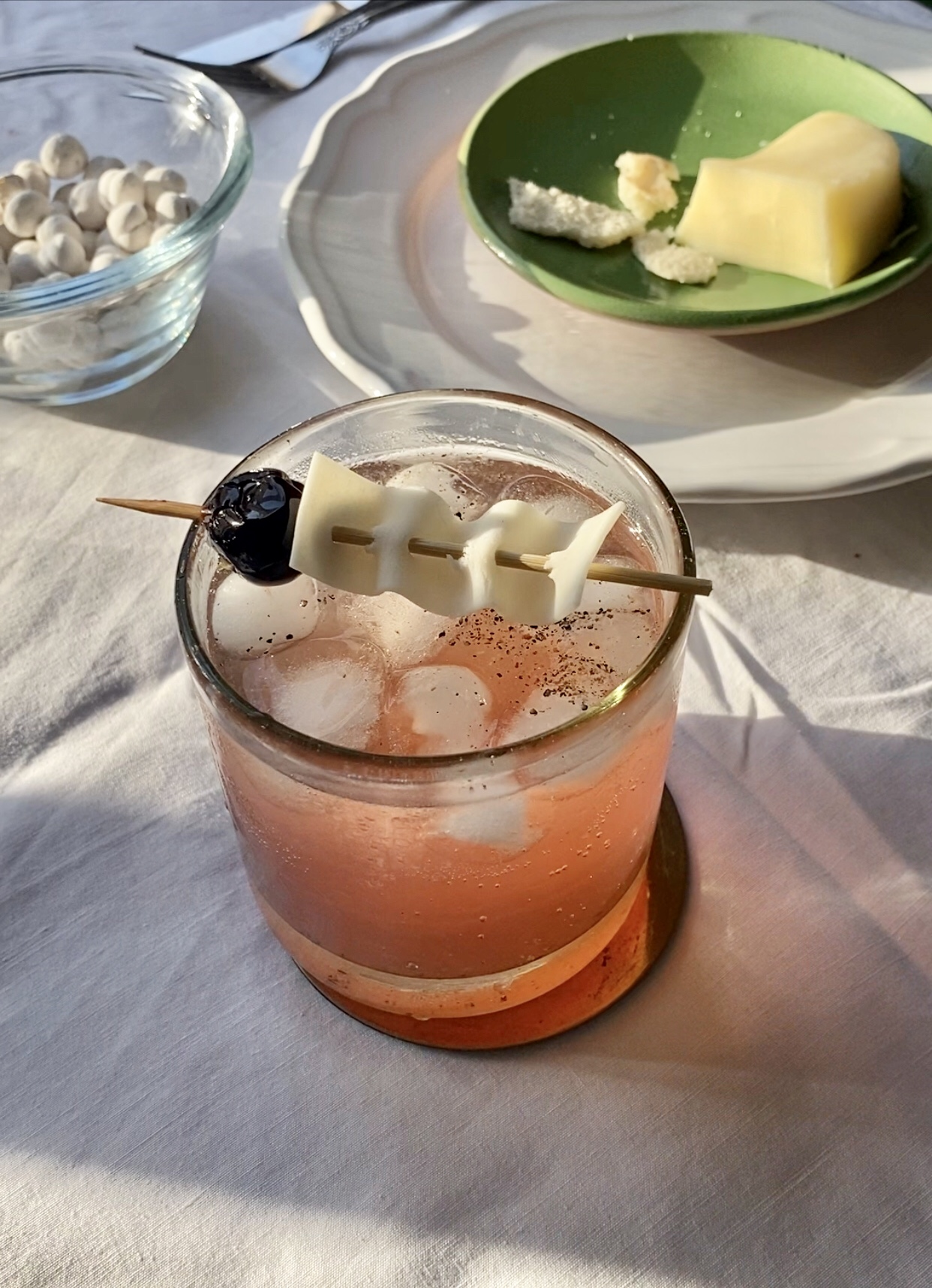
Rewilding the Kitchen | Mastic Fizz by Salma Serry
style
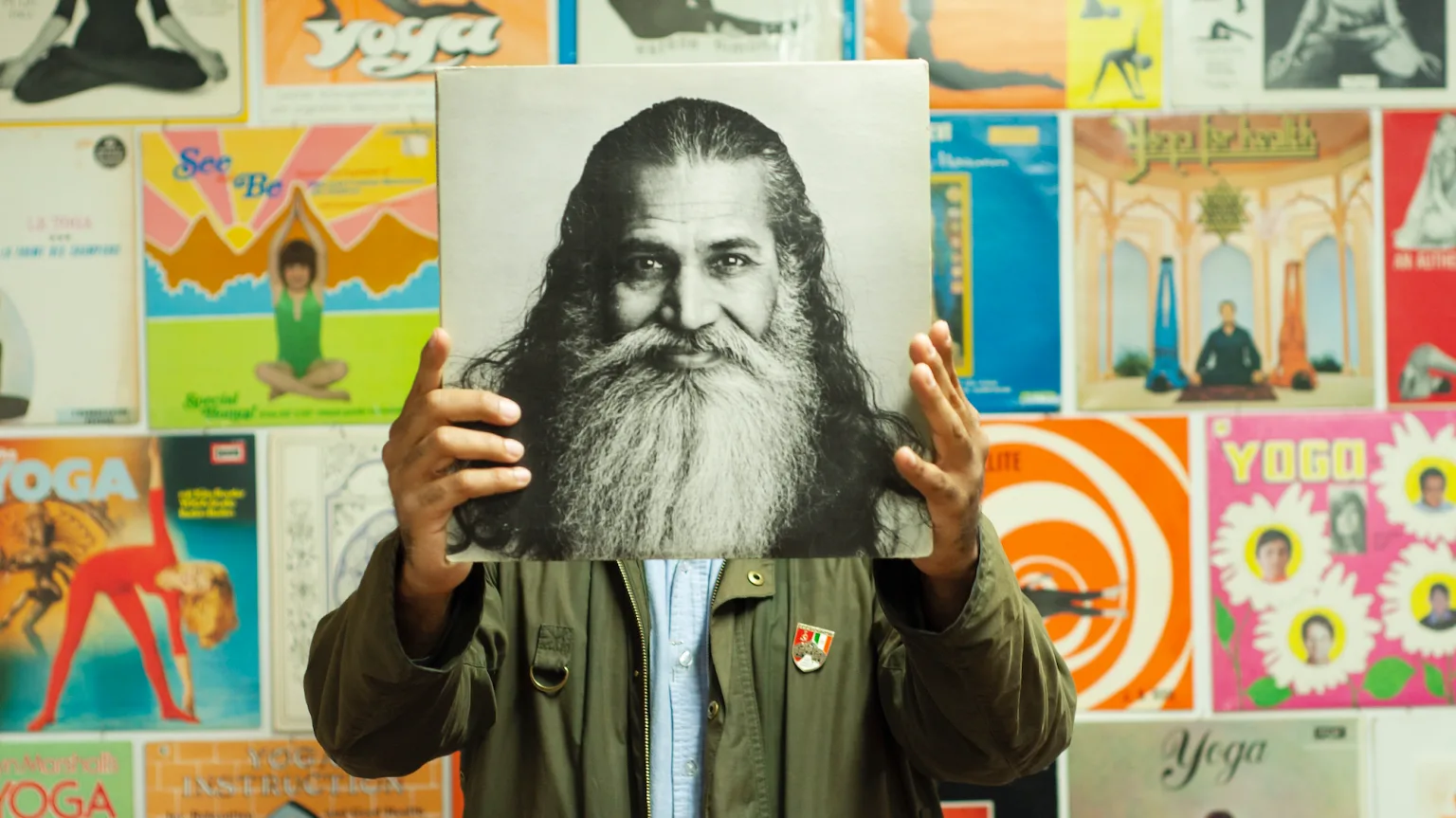
Who Owns Yoga?
expression
The Tower by Wilf Speller
culture
The Suffering Body
culture
August Observations
culture
Rewilding the Kitchen | Recipe No. 1 | Barri by Namliyeh
culture
Cultures in Conversation at Expo 2020
culture
On Emirati Women
culture
The Alserkal Ecology Reader | Three Lectures on Architecture and Landscape in the Gulf
expression
Three Conversation Pieces III
culture
An Incomplete History of UAE Cinemas, Part 2
opinion
Design as a Wrapper
opinion
Engaging Audiences
expression
Three Conversation Pieces II
expression
Three Conversation Pieces I
culture
The Overseas Filipino Artist
culture
An Incomplete History of UAE Cinemas, Part 1
expression
Drone Go Chasing Waterfalls
expression
A Letter
opinion
Will the Fashion Industry Ever Truly Be Sustainable?
culture
How Will We Return?
culture
Mohamed Melehi And The Casablanca Art School Archives
expression
An Introductory Curriculum for Reparations
culture
METASITU in conversation with Ghada Yaiche
culture
Cape Town: A New Capital for Art
opinion
The Lighthouse Podcast x Vilma Jurkute
culture
Connecting Cultures Through Contemporary Art
culture
One-on-One with Nabila Abdel Nabi
culture
The Making of a Ruin
culture
Mystical Warriors
culture
Is This Tomorrow?
culture
Slippery Modernism
culture
Is This Tomorrow? Art vs Architecture
culture
Living Under The Net
style
At the Confluence of Art and Industry
culture
Poetry In Motion
culture
Collaborative Co-existence
culture
An Artistic Meditation
culture
Fabric(ated) Fractures
culture
The Africa Connection
culture
The Fabric of Fractures
culture
Chaos, Love, and Enigmas
culture
A Modern History
culture
Hydrogen Helium
culture
Q&A: Hale Tenger And Mari Spirito
culture
Re-Examining The Role Of The Museum In Society